Company profile
BitMain: the maker of Antminer and the giant of Bitcoin mining hardware
BitMain is a Chinese technology company that designs and manufactures application specific integrated circuits, better known as ASICs, for cryptocurrency mining. Founded in 2013, BitMain grew from a small Beijing startup into the dominant supplier of Bitcoin mining machines, and its Antminer product line became the default hardware for miners around the world. This page explains what BitMain does, how its machines work, where it sits in the industry, and what a prospective buyer should understand before purchasing.
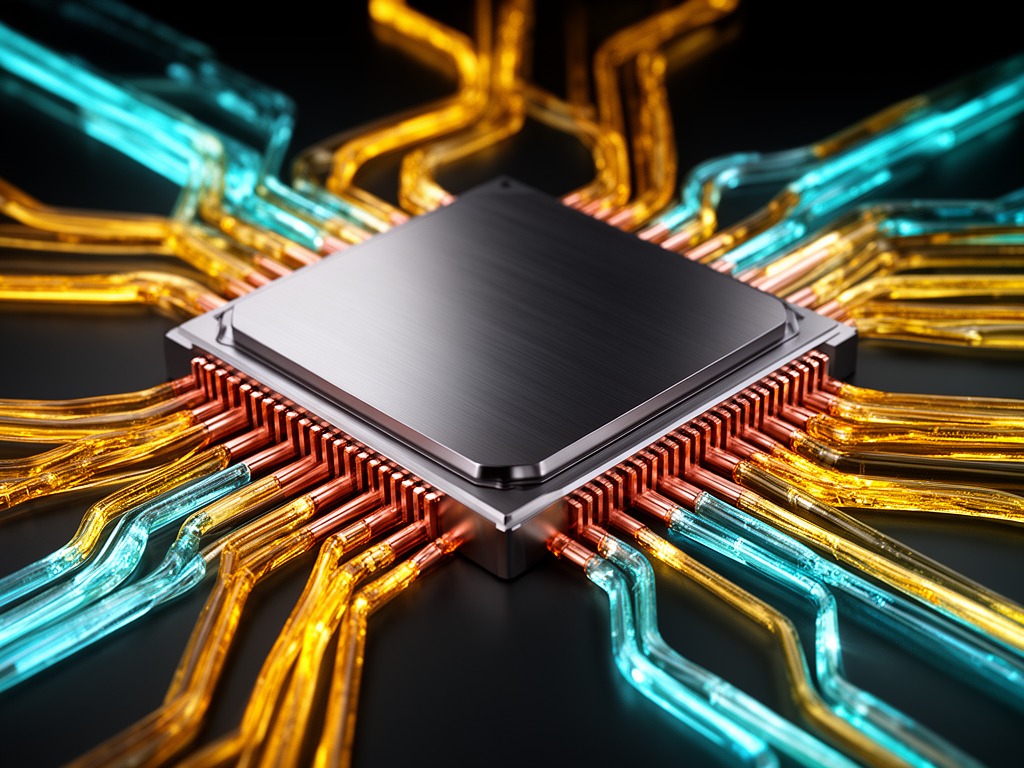
In short: BitMain builds the specialized computers that secure and mint several major proof of work blockchains. If you have read about Bitcoin mining, you have almost certainly read about BitMain, because for most of the last decade the company has held the largest share of the market for the chips that do the work.
The name BitMain is a compound that hints at its purpose: bit, as in Bitcoin and binary data, and main, as in mainstay or main line. From the beginning BitMain positioned itself not as a trading platform or an exchange but as an industrial hardware maker, closer in spirit to a semiconductor firm than to a fintech app. That focus has shaped everything about how BitMain operates.
Understanding BitMain requires a little context about the mining economy. Proof of work blockchains reward participants who spend computing power to validate transactions and add blocks. The more efficient your hardware, the more coins you can earn for a given amount of electricity. BitMain competes by making chips that squeeze more hashing work out of every watt, and that efficiency race is the core of the entire business.
A short history of BitMain
BitMain was founded in 2013 by Micree Zhan and Jihan Wu. Zhan brought chip design expertise, having worked on integrated circuits, while Wu came from a finance and investment background and had been an early Chinese translator and evangelist of the Bitcoin whitepaper. That pairing of engineering and market instinct defined BitMain in its first years.
The company's first major product, the Antminer S1, arrived in late 2013. It was crude by later standards but it proved the model: purpose built ASIC hardware could vastly outperform the graphics cards and general purpose chips that hobbyists had used until then. Each subsequent Antminer generation from BitMain pushed efficiency further, and the market rewarded the company handsomely as Bitcoin prices climbed.
By the mid 2010s BitMain had become a powerhouse. It expanded beyond hardware into mining pools, most notably operating and backing pools that at times commanded a very large share of the Bitcoin network. This vertical reach, from chip design to the pools where the mining rewards were coordinated, made BitMain one of the most influential single actors in the entire Bitcoin ecosystem.
Growth was not smooth. BitMain filed to go public in Hong Kong in 2018, but the application lapsed amid a downturn in cryptocurrency prices and questions about the volatility of the business. A well publicized leadership dispute between the two co founders followed, and control of BitMain shifted over a turbulent period. Zhan eventually consolidated leadership after a protracted internal fight that spilled into public view.
The company also weathered major external shocks. China's tightening stance on cryptocurrency mining, culminating in a broad crackdown in 2021, pushed much of the mining industry offshore. BitMain adapted by serving a customer base that had relocated to North America, Central Asia, and other regions with cheaper or friendlier power. Through all of this, BitMain kept shipping new Antminer models and defended its position at the top of the market.
How BitMain's ASIC mining works
To understand why BitMain matters, it helps to understand what its machines actually do. A proof of work blockchain like Bitcoin relies on miners repeatedly running a cryptographic hash function, in Bitcoin's case SHA-256, on candidate blocks. Miners search for an input that produces an output below a target value. Finding one is pure trial and error, so the machine that can try the most combinations per second, most cheaply, wins.
An ASIC is a chip designed to do exactly one thing and nothing else. Unlike a general purpose processor, a BitMain mining chip cannot browse the web or run a spreadsheet. It exists only to compute hashes, and because it is stripped of everything unrelated, it does that job orders of magnitude faster and more efficiently than a CPU or GPU. This specialization is the entire reason BitMain hardware exists.
The key metrics for any BitMain miner are hashrate and efficiency. Hashrate, measured in terahashes per second (TH/s) for Bitcoin machines, tells you how many hash attempts the unit makes. Efficiency, measured in joules per terahash (J/TH), tells you how much electricity it burns to do so. A modern BitMain Antminer might advertise well over a hundred terahashes per second while consuming a fraction of the energy per hash of older models.
Key takeaway
Two numbers decide whether a BitMain miner is worth running: how much it hashes (TH/s) and how little power it uses per hash (J/TH). Everything else is secondary.
Inside a BitMain machine, dozens of these ASIC chips are mounted on hash boards, cooled by large fans or, in newer models, by immersion or hydro cooling systems. A control board runs the mining software, connects to a pool over the network, and manages the boards. The physical design of a BitMain unit is dictated almost entirely by the need to move heat away from chips that run flat out around the clock.
Because the chips run continuously, thermal management is central to BitMain engineering. Heat is the enemy of both efficiency and longevity, so BitMain has invested heavily in cooling. Its air cooled units use powerful fans and precise airflow paths, while its hydro and immersion lines circulate liquid to pull heat away far more effectively, allowing higher clock speeds and denser deployments.
The manufacturing side is just as important. BitMain designs its chips but relies on leading foundries to fabricate them at advanced process nodes. Moving to a smaller node lets BitMain pack more transistors into the same area and cut power draw, which is why each new Antminer generation tends to arrive alongside a step down in nanometers. This dependence on cutting edge fabrication ties BitMain's fortunes to the broader semiconductor supply chain.
What BitMain makes
BitMain's product portfolio centers on mining hardware, but it spans several categories. The flagship is the Antminer family for Bitcoin and other SHA-256 coins. Alongside it, BitMain has produced miners for different algorithms, including machines aimed at coins that use scrypt or other proof of work functions, so that its lineup covers more than a single currency.
Beyond individual machines, BitMain sells at industrial scale. Large mining operations buy BitMain hardware by the thousands of units, and BitMain has structured its sales, logistics, and support around that reality. The company also builds and supports the infrastructure around deployment, including power and cooling guidance for the data center scale facilities its customers run.
Historically BitMain also ventured into artificial intelligence chips under a separate brand, applying its ASIC design experience to machine learning workloads. While mining hardware remains the core of BitMain, that diversification reflected a recognition that the same skill in designing specialized silicon can be pointed at other compute heavy problems.
The through line across everything BitMain sells is specialization. BitMain does not try to be a general electronics brand. It concentrates on domains where a custom chip beats general purpose hardware by a wide margin, and mining is the purest example of that.
The Antminer series
The Antminer name is nearly synonymous with BitMain. The series began with the S1 in 2013 and has advanced through many generations, with the S series being the best known line for Bitcoin. Over the years the S9 became one of the most widely deployed miners in history, and later the S17, S19, and S21 families carried BitMain forward as efficiency demands intensified.
Within a generation, BitMain typically offers several variants. There are standard models, higher efficiency Pro and Hydro versions, and sometimes XP or immersion editions tuned for particular deployment styles. This lets a buyer match a BitMain machine to their power cost and cooling setup rather than forcing everyone onto a single configuration.
The S9, released around 2016, deserves special mention. It was so durable and widely produced that units remained in service for years, long after newer BitMain models had surpassed them, wherever electricity was cheap enough to keep them profitable. The S9 is a good illustration of how BitMain hardware can have a long tail of usefulness even as the frontier moves on.
The S19 generation, which appeared in 2020, represented a large efficiency jump and became the workhorse of the industry through the last Bitcoin halving cycle. Its Pro and XP variants pushed BitMain further, and the later S21 line continued the trajectory, with hydro cooled versions reaching efficiency figures that would have seemed impossible a few years earlier.
BitMain also produces the Antminer L series for scrypt based coins such as Litecoin and Dogecoin, which are merge mined, and other specialized units. This breadth means that when miners of non Bitcoin proof of work coins look for hardware, BitMain is frequently on the shortlist too, not just for Bitcoin.
Comparing BitMain Antminer generations
The table below shows the general trajectory of BitMain Antminer Bitcoin miners across generations. Exact figures vary by variant and firmware, so treat these as representative rather than precise for any single unit. What matters is the direction: rising hashrate and steadily falling energy per hash.
| Model | Era | Approx. hashrate | Relative efficiency |
|---|---|---|---|
| Antminer S1 | 2013 | ~0.18 TH/s | Very low |
| Antminer S9 | 2016 | ~14 TH/s | Moderate |
| Antminer S17 | 2019 | ~50 TH/s | Good |
| Antminer S19 | 2020 | ~95 to 110 TH/s | High |
| Antminer S21 | 2023 onward | ~200 TH/s and up | Very high |
Figures are approximate and vary by variant. Source: general reporting on BitMain product releases.
The lesson of the table is stark. In roughly a decade, BitMain took the Antminer from under a fifth of a terahash to well over two hundred, while cutting the energy each hash consumes many times over. That relentless improvement is exactly why older BitMain machines eventually stop being profitable and get replaced.
BitMain's market position
BitMain has long been described as the leading maker of Bitcoin mining hardware by market share, competing chiefly with a small number of rivals. The bar chart below gives a rough, illustrative sense of how the ASIC maker market has typically been divided, with BitMain holding the largest slice.
Illustrative ASIC market share
-
BitMain~65%
-
Competitor A~18%
-
Competitor B~10%
-
Others~7%
Illustrative only. Actual shares shift each cycle. Source: general industry reporting.
This dominance gives BitMain real pricing power and influence over the mining industry. When BitMain releases a new generation, it can reshape the economics of mining overnight, because a more efficient machine raises the bar for everyone and pushes older hardware toward the exit. That is a lot of leverage for one company to hold.
The flip side is that BitMain's fortunes are tightly coupled to the Bitcoin price cycle. When prices rise, demand for BitMain machines surges and lead times stretch; when prices fall, orders dry up and inventory can pile up. This boom and bust rhythm has repeatedly tested BitMain's balance sheet and is one reason its earlier attempts to go public struggled.
BitMain in the wider ecosystem
BitMain is not only a hardware vendor. Over the years it has been connected to mining pools, cloud mining offerings, hosting services, and repair and firmware operations. This gives BitMain touchpoints across almost the entire mining stack, from the moment a chip is designed to the moment a reward lands in a pool.
That breadth has occasionally raised concerns about concentration. When one company designs most of the hardware and also operates or backs some of the largest pools, observers worry about the effect on Bitcoin's decentralization. BitMain has at times reduced its direct pool involvement, but its influence over the physical layer of Bitcoin remains significant simply because so many miners run BitMain machines.
BitMain also plays a role in setting industry expectations. Its release schedule, its efficiency claims, and its pricing set the reference points that competitors must react to. In practice, a lot of mining industry planning revolves around what BitMain is expected to ship next and when.
How to think about choosing a BitMain miner
If you are considering a BitMain machine, the decision comes down to economics rather than raw specs. Start with your electricity cost, because power is the single largest ongoing expense in mining. A very efficient BitMain unit can be profitable at power prices where an older machine would lose money on every kilowatt hour.
Next, weigh the purchase price against expected returns. A brand new flagship BitMain Antminer costs far more upfront than a used prior generation model, but it also earns more and burns less power per hash. The right choice depends on how long you plan to run it, your cooling situation, and your view on where the Bitcoin price and network difficulty are heading.
Cooling matters too. An air cooled BitMain unit is simpler to deploy but noisy and heat intensive, which is fine for a dedicated facility but rarely acceptable in a home. Hydro and immersion BitMain models run quieter and denser but require plumbing, tanks, or cooling loops that add cost and complexity. Match the machine to the space you actually have.
Rule of thumb: never buy a BitMain miner on hashrate alone. Model the full picture, including your power rate, the current network difficulty, cooling costs, and how long you can realistically keep the unit running before it is obsolete.
Finally, factor in noise, firmware, and support. BitMain machines are loud and generate real heat, and firmware updates can affect both efficiency and warranty. Buying from BitMain directly or an authorized reseller reduces the risk of counterfeit or refurbished units sold as new, a genuine problem in the secondary market for BitMain hardware.
Getting started with a BitMain miner
If you decide to proceed, the process of putting a BitMain machine to work follows a predictable sequence.
- 1
Confirm your power supply and cooling. Check that your circuit can deliver the voltage and amperage a BitMain unit needs, and plan how you will remove the heat it produces.
- 2
Buy from a trusted source. Order from BitMain or an authorized reseller to avoid counterfeits, and verify serial numbers and warranty terms on arrival.
- 3
Connect and configure. Plug the BitMain miner into power and network, find its IP address, and log into its web interface to set it up.
- 4
Join a mining pool. Enter your chosen pool address and worker credentials so your BitMain machine contributes hashrate and earns a share of rewards.
- 5
Monitor and maintain. Track temperature, hashrate, and error rates, keep firmware current, and clean dust regularly so your BitMain unit stays efficient and lasts.
Criticism, risks, and controversies
No account of BitMain is complete without the criticism. The most common concern is energy use. BitMain machines are built to consume electricity at scale, and the environmental footprint of Bitcoin mining, much of it running on BitMain hardware, has drawn sustained scrutiny from regulators, environmental groups, and the public.
There are also market concerns. Because BitMain has held such a large share, critics argue it exerts outsized influence over Bitcoin's hardware layer and, at times, over mining pools. Concentration in a decentralized system is inherently uncomfortable, and BitMain sits at the center of that tension.
Business execution has been bumpy at points. The founder dispute, the lapsed public offerings, and the swings driven by crypto price cycles have all created uncertainty for customers who plan large capital purchases. Buyers of BitMain hardware also contend with a lively secondary market where mislabeled and refurbished units are common.
Regulatory exposure is real too. As a company rooted in China selling globally, BitMain has navigated export considerations, tariffs, and shifting policy on cryptocurrency mining in multiple jurisdictions. These forces can affect availability and price of BitMain products in ways that have nothing to do with the technology itself.
None of this negates BitMain's technical achievement. The company genuinely advanced the state of mining silicon and made Bitcoin's security cheaper to provide. But a fair picture of BitMain has to hold the engineering success and the legitimate concerns in the same frame.
Frequently asked questions
What is BitMain?
BitMain is a Chinese company founded in 2013 that designs and manufactures ASIC hardware for cryptocurrency mining. It is best known for the Antminer product line and is generally regarded as the largest maker of Bitcoin mining machines.
What is an Antminer?
Antminer is BitMain's flagship line of ASIC miners. The S series targets Bitcoin and other SHA-256 coins, while other lines such as the L series target different algorithms. Each generation from BitMain improves hashrate and energy efficiency.
Is a BitMain miner profitable?
It depends mostly on your electricity cost, the price of the coin you mine, and current network difficulty. A modern efficient BitMain unit can be profitable where power is cheap, while an older model may lose money. Always model the full economics before buying.
Where should I buy BitMain hardware?
Buy from BitMain directly or an authorized reseller to reduce the risk of counterfeit or misrepresented units. The secondary market for BitMain machines is active, so verify serial numbers, warranty status, and condition carefully.
Can I run a BitMain miner at home?
Technically yes, but most air cooled BitMain machines are extremely loud and produce a lot of heat, which makes them impractical in a living space. Dedicated space, adequate electrical capacity, and ventilation are essential, and hydro or immersion setups add their own requirements.
Who founded BitMain?
BitMain was founded in 2013 by Micree Zhan and Jihan Wu, combining chip design expertise with a finance and market background. Leadership later went through a well publicized dispute before control was consolidated.
This page is an independent informational overview of BitMain and is not affiliated with, endorsed by, or sponsored by the company. Specifications and market figures are approximate and change over time; verify current details with BitMain before making a purchase.